
Bathroom renovations in Hobart often begin with a simple question from homeowners: "Can we just update part of the bathroom?"
Perhaps the bath feels outdated, the shower is leaking, or the vanity simply needs refreshing. On the surface, replacing one or two fixtures can seem like a practical way to reduce costs and minimise disruption.
However, once renovation work begins - particularly in older homes across suburbs such as Moonah, Sandy Bay, or Bellerive - these partial upgrades quickly run into a much larger issue: waterproofing compliance. Under the National Construction Code (NCC) Housing Provisions and Australian Standards, bathroom renovations are rarely suitable for partial upgrades, because once tiles or fixtures are removed, the waterproofing system that protects the room is almost always compromised.
Because of this, most bathroom renovations in Hobart require the space to be stripped back and rebuilt with a new continuous waterproofing system, rather than modified in isolated sections.
Understanding why this is necessary helps homeowners avoid compliance issues, structural damage, and costly repairs later.
Bathrooms are classified as wet areas, meaning they must meet strict waterproofing requirements designed to protect the structure of the home from moisture damage. The waterproofing membrane installed behind tiles forms a barrier that prevents water from penetrating into wall framing, flooring systems, and surrounding structural elements.
When waterproofing fails, the effects are rarely immediate. Instead, moisture slowly migrates through building materials, eventually causing issues such as mould growth behind wall linings, swelling or decay in structural timbers, tile movement or grout deterioration, and hidden moisture damage in subfloors.
In Tasmania's cooler climate, moisture evaporates more slowly than in warmer regions, which means dampness can remain trapped inside wall cavities or floor systems for extended periods if waterproofing is inadequate. For this reason, waterproofing is one of the most critical stages of any bathroom renovation.
A common request we receive from homeowners is whether a bath, shower, or vanity can be replaced without renovating the entire bathroom.
Unfortunately, this is rarely possible under modern construction standards.
Once tiles or fixtures are removed, the waterproofing membrane beneath them is almost always damaged. Waterproofing membranes must remain continuous and uninterrupted across the entire wet area to perform correctly, and even a small break in that membrane can create a pathway for moisture to enter the structure.
Attempting to patch or join new waterproofing to existing materials introduces uncertainty around adhesion, membrane compatibility, and long-term durability. There is also rarely any way to verify whether the original waterproofing was installed correctly in the first place.
For this reason, partial waterproofing repairs are generally not considered reliable or compliant under current standards.

Many homes across Hobart were built before modern waterproofing systems became standard practice. In bathrooms constructed prior to the early 2000s, it is common to find tiles installed directly onto cement sheet or plasterboard with little or no waterproofing membrane behind them - at the time, grout lines and tile surfaces were often relied upon to manage moisture.
While this approach was once widely accepted, it does not meet modern requirements under AS 3740 - Waterproofing of Domestic Wet Areas. When renovation works begin in these homes, removing tiles often reveals substrates that were never designed to support a compliant waterproofing system.
Zak explains: "A lot of the bathrooms we open up around Hobart simply don't have waterproofing behind the tiles at all."
"Once demolition starts, we're often looking straight at cement sheet or plasterboard. That's why partial renovations rarely work - if we're going to bring the bathroom up to current standards, the waterproofing has to be installed properly across the entire space."
"There's no shortcut around it, and honestly, you wouldn't want one."
To install waterproofing correctly, builders need full access to the wall and floor substrates, which allows the surface to be prepared properly and ensures the membrane can be applied continuously across the wet area. A compliant bathroom renovation typically involves the following stages.
Removing existing tiles and fixtures allows the underlying structure to be inspected and prepared.
Assessing wall and floor substrates confirms that surfaces are stable, clean, and suitable for membrane application.
Installing compliant wet-area materials addresses any sheeting or floor preparation needed before the membrane goes on.
Applying a continuous waterproofing membrane across floors, walls, junctions, and penetrations is the critical step that everything else depends on.
Finally, allowing correct curing times before tiling begins ensures long-term adhesion and performance.
Without stripping the bathroom back to these underlying surfaces, it is not possible to guarantee that the waterproofing system meets modern code requirements.
Read More: If you want a clearer picture of what each stage involves, our post on navigating the renovation journey from concept to completion walks through the full construction sequence.
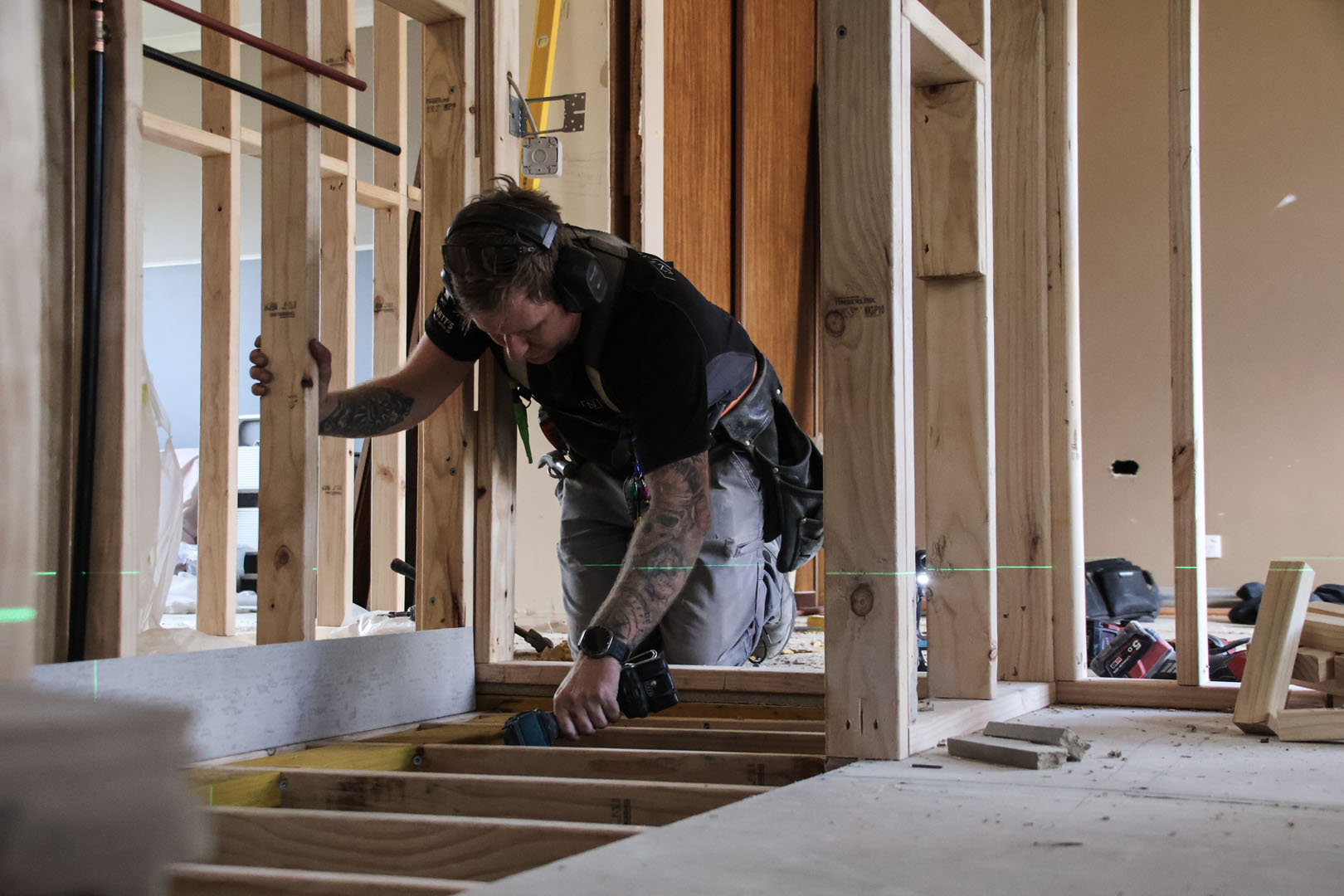
Another consideration worth understanding is builder warranty coverage.
At Nomac Built, bathroom renovations include a 10-year waterproofing warranty and a 7-year structural warranty. Providing these warranties requires confidence that the waterproofing system has been installed correctly and continuously across the entire wet area.
If only part of a bathroom is renovated, there is no way to guarantee the integrity of the existing waterproofing behind the remaining surfaces, which is why reputable builders will generally recommend complete waterproofing replacement rather than partial repairs.
Something homeowners often overlook is the insurance dimension. Most home insurance policies do not cover damage that results from defective workmanship or non-compliant construction, meaning that if a bathroom renovation is completed incorrectly - particularly when waterproofing does not meet Australian Standards - the resulting damage may not be covered.
In practical terms, if moisture enters wall cavities or flooring systems due to failed waterproofing, insurers may classify the issue as a construction defect rather than an insurable event.
This can leave homeowners responsible for repairing not only the bathroom itself, but also any surrounding structural damage.
Zak explains: "Waterproofing is one of those things you never see once the job is finished, but it's doing the most important work behind the scenes."
"If it fails, the damage can spread well beyond the bathroom itself - and we've seen cases where it's crept into adjoining walls, subfloors, even into rooms next door. Unfortunately insurance doesn't always cover defective workmanship, so this is one area where cutting corners can get very expensive, very quickly."
For this reason, homeowners should feel comfortable asking their builder or contractor about the waterproofing process.
Important questions include:
If you're not sure what those answers should look like, our post on what to expect from your builder when you receive a quote covers the transparency and documentation you should expect from any reputable builder.
While structural bathroom renovations usually require full waterproofing replacement, some cosmetic updates can still be completed without disturbing the waterproofing system. These may include replacing mirrors or accessories, upgrading lighting or exhaust fans, repainting ceilings, or installing new tapware where tiles remain completely untouched.
However, once tiles, showers, baths, or wall linings are removed, the renovation typically moves into the scope of a full bathroom rebuild.
Hobart's housing stock ranges from Federation cottages to mid-century homes and modern infill developments.
In suburbs such as West Hobart, Moonah, and Lenah Valley, many bathrooms have evolved through decades of small modifications, and demolition often reveals hidden plumbing adjustments, structural irregularities, or outdated materials that were not visible before work began.
Beginning the renovation with a clean slate allows these issues to be addressed properly while installing a compliant waterproofing system that protects the home long term. It's also worth understanding the cost implications upfront - our bathroom renovation costs guide breaks down where your money actually goes across each stage of the build.
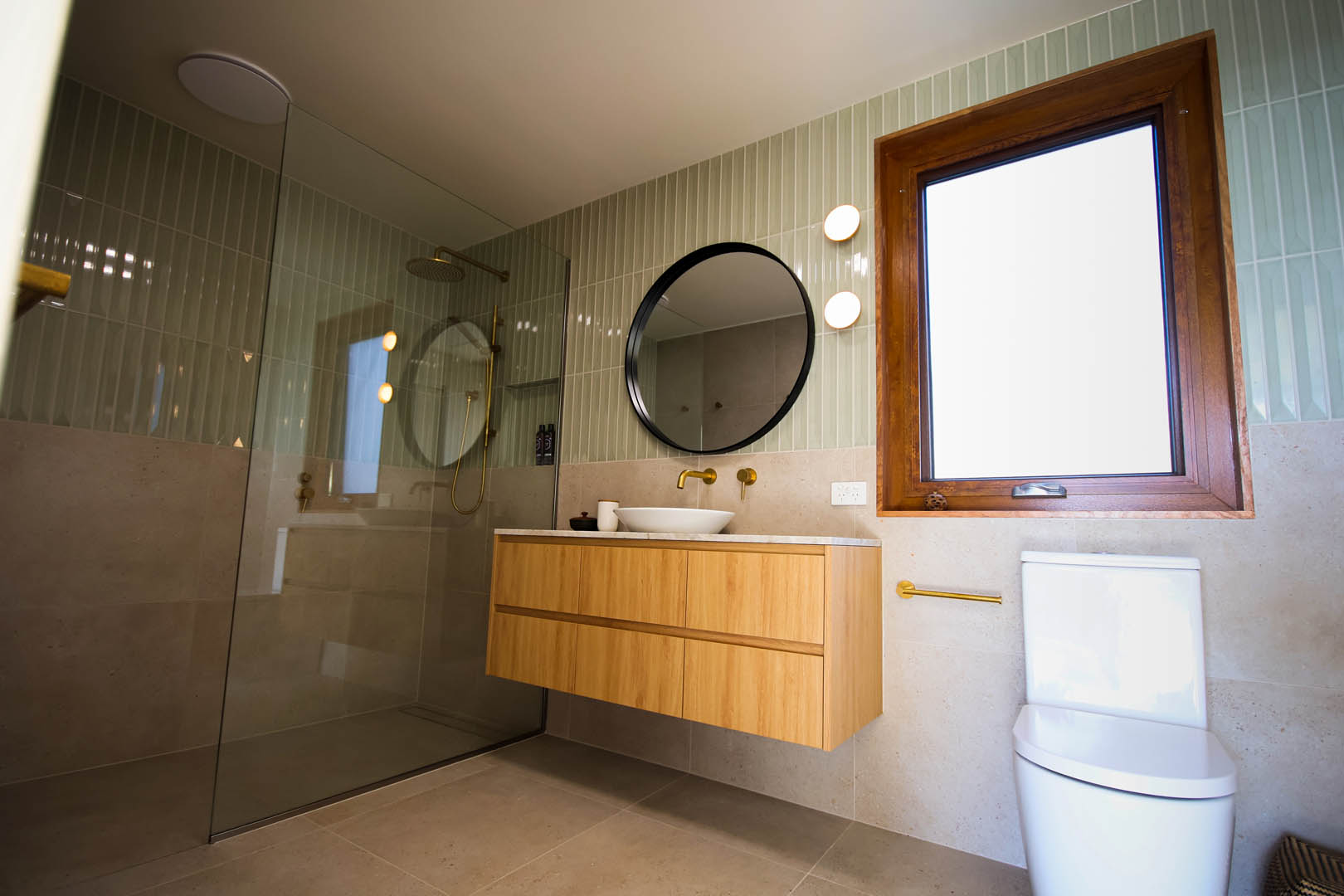
Bathroom renovations in Hobart often begin with the hope of making a small update, but once waterproofing requirements are considered, it quickly becomes clear that partial upgrades are rarely the safest or most compliant solution.
Removing tiles or fixtures typically breaks the waterproofing layer that protects the room, and once that protection is compromised, the most reliable solution is installing a new continuous waterproofing system across the entire wet area.
Although this approach requires more preparation at the outset, it ensures the renovation meets modern building standards and protects the structure of the home for years to come.
Nomac Built works with homeowners across Hobart and surrounding suburbs to deliver bathroom renovations that prioritise compliance, durability, and thoughtful planning from the very beginning. If you're at the early stages of planning and want to get your ducks in a row before reaching out, our pre-quote checklist is a good place to start.
If you're ready to talk through your project, get in touch with us - we're happy to walk you through what's involved before any commitment is made.
Written by Zak and Tom of Nomac Built

July 2, 2026
Staying in your home during a renovation? Learn how to plan a live-in renovation in Hobart that stays liveable, safe and on track from start to finish.
read full post
May 18, 2026
What does years of working on Tasmanian homes actually teach a builder? Tom and Zak from Nomac Built share what local experience means for renovations and new builds in Hobart.
read full post
June 22, 2026
Wondering how much a home extension costs in Hobart in 2026? This guide breaks down realistic cost ranges, what drives price differences across Hobart suburbs, and how to plan your extension budget properly.
read full post
May 27, 2026
Trying to decide between renovating or rebuilding in Hobart? This guide explains costs, site factors and long-term value to help you choose the right approach.
read full post
March 31, 2026
Wondering how much it costs to build a house in Hobart in 2026? This guide explains realistic building costs, cost per m² in Tasmania and the factors that influence your final budget.
read full post
March 30, 2026
Discover which home extensions add the most value in Tasmania in 2026. Practical insights on layout, flexibility and resale appeal for Hobart homeowners.
read full post
