
Bruny Island is one of the most sought-after places to build in Southern Tasmania, and it's easy to see why. It's also one of the most logistically demanding, for a reason most people don't think about until they're actually running a project there: everything, and everyone, has to get on the ferry.
We're currently on our second project on Bruny Island, and the logistics involved are genuinely different to anything on the mainland side of the channel. It's still a custom home build at its core, the site and the brief still drive the design, but getting everything and everyone there and back adds a layer of planning most mainland projects never have to think about.
Here's what actually goes into building here, and what to expect if you're planning a project on the island yourself.
Most people's experience of the Bruny ferry is a family day trip or a weekend away, a short wait, then straight on. Running a construction project through that same ferry schedule is a different problem entirely, because now every vehicle and every person heading to site has to earn its place on that timetable rather than just rolling up.
Every vehicle needs its own booked spot, whether that's a concrete truck, a trade's ute or a delivery of materials. They're all competing for the same limited vehicle spaces as everyday ferry traffic, and missing a booking by even one sailing can tip the whole day's plan sideways. That's why every vehicle heading to a Bruny build is locked into a specific sailing well before the day itself.
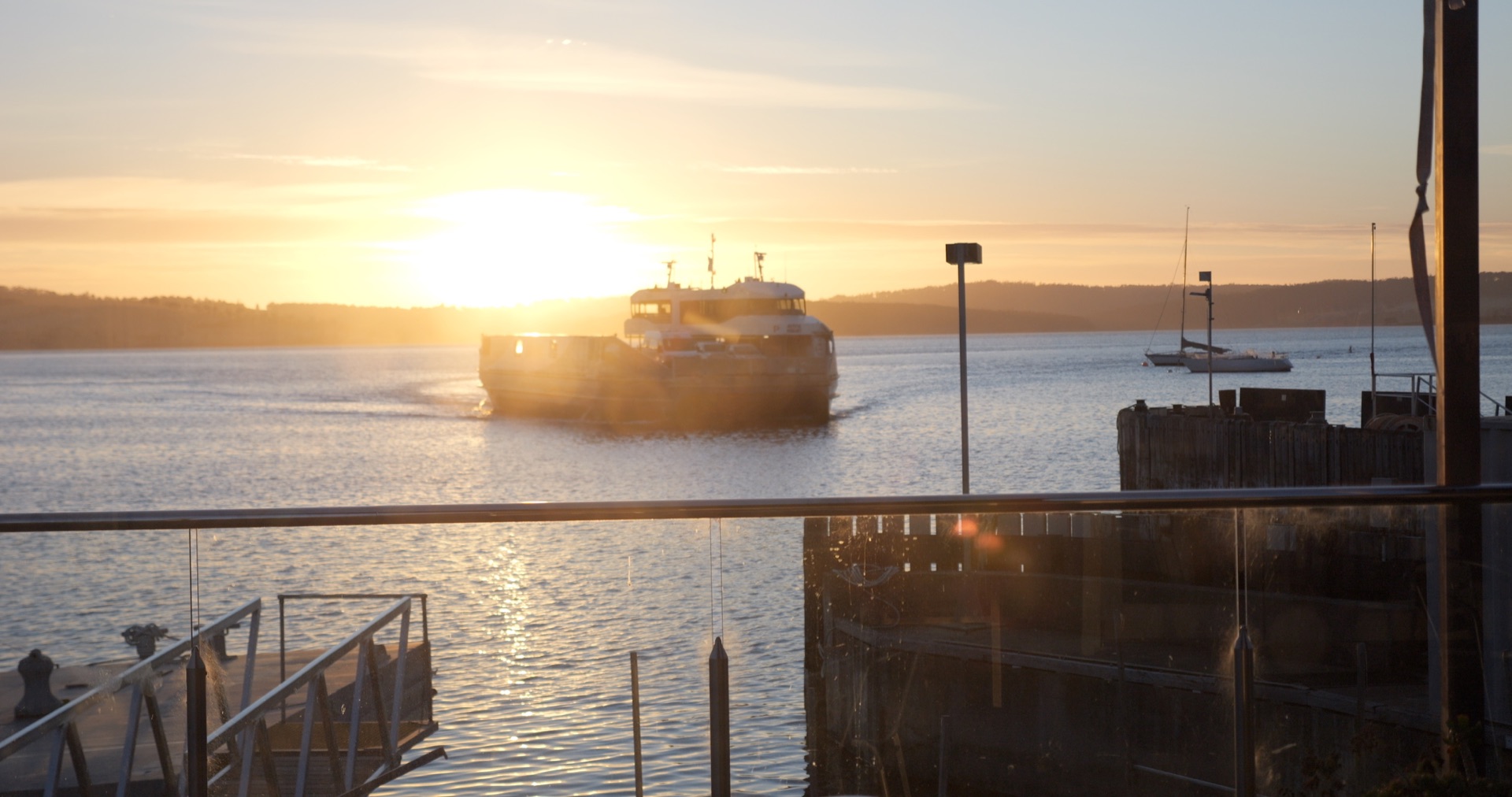
It's not enough for every truck and trade to simply be on the island at some point, either. They need to land in the right order, so a trade isn't left waiting on a delivery that's still queued for the next sailing. Getting that running order right is its own piece of planning before a single truck leaves the depot.
Zak puts it plainly: "We all know about the ferry and the challenges that presents when you're heading over for a holiday or a family getaway. But when we talk about a construction process on Bruny Island, those logistical challenges become so much more exacerbated. There's a lot of planning and strategic thinking that has to go into a project like this, long before anyone turns up on site."
The scale of coordination becomes obvious on a day like a slab pour.
On Project Alonnah, our current build, we've had 11 to 13 concrete trucks coming to site in a single day, along with a 36 metre boom pump and over a dozen trades personnel, all needing to be booked onto the ferry and sequenced correctly once they're on the island.
Check out an update from our socials on Project Alonnah below:
This isn't a typical day on a Hobart or Kingston build.
It's a logistics exercise before it's a construction one, and getting the running order wrong on the ferry can mean a truck arrives out of sequence, or a trade is left waiting on site with nothing to do.
Standing on site with the slab going down, Zak summed up the day: "We've got up to 13 concrete trucks coming to site today, along with over a dozen trades personnel and we've also got the 36 metre boom pump over my shoulder."
The risk is a truck missing its booked sailing. There's only one way on and off the island, so that truck waits for the next available sailing, and everyone booked in after it on site is effectively on hold until it turns up.
Weighing up a build on Bruny Island? Get in touch and we'll talk through what the logistics actually look like for your site.
Because so much of a Bruny build depends on timing that's outside the usual construction variables, ferry schedules, sailing changes, booking availability, we dedicate a project manager specifically to managing that side of the job.
Their role is to keep the logistics moving so the build itself isn't held up by something that has nothing to do with the actual construction. It's the same approach to communication we run through every project, which we've mapped out in detail in our guide to the renovation process, from first consultation through to handover.
Zak is direct about this: "We dedicate a project manager that deals with all the logistical challenges of getting to Bruny Island, so that we can have flawless execution of projects without timely impacts on the project."
In practice, that means the project manager is the one holding the ferry bookings, tracking sailing changes and keeping every truck, trade and delivery lined up to the agreed running order, so the rest of the team can get on with the actual build rather than chasing logistics. It is a role most mainland Hobart projects do not need in the same way, simply because nothing on those jobs depends on a booked sailing before it can even start.
It also gives clients one clear point of contact for anything logistics-related, rather than that responsibility being split across whoever happens to be dealing with a particular trade or delivery on a given day. If a sailing changes or a delivery needs rebooking, there's already someone across it, so it comes through as part of the normal build update rather than a separate issue the client has to chase up themselves.
Project Lumeah was our first build on the island, and it's now in the final stretch, with handover to our clients planned for Christmas. Every delivery on it has had to be timed around the ferry runs, which is a very different rhythm to a mainland job.
Zak explains the difference: "As with any project here on Bruny Island, the logistical challenges always exist. The team have had to coordinate scheduled deliveries, timing with ferry runs. This is vastly different to anything that we might be doing in the Kingston, Huonville area where we have a Mitre 10 just down the road."
Tom, co-owner of Nomac Built, has been just as hands-on. As Zak says: "He's really in the trenches when it comes to the construction process. He lives and breathes these from start to finish."
Building on Bruny Island doesn't have to mean an unpredictable timeline, but it does mean the planning phase matters more than it would on a mainland Hobart site, because so much of the schedule gets locked in before the first truck is ever booked.
Ferry capacity, weather windows and the sequencing of trades and deliveries all need to be worked out early, not left to figure out once the build is already underway. That's the real difference in how a Bruny timeline comes together, not the construction itself.
Quoting and design carry more weight upfront too. Trade availability, material deliveries and ferry bookings all need to be locked in well ahead of the build actually starting. That's not a reason to rush the planning stage, if anything it's the opposite, the lead time gets built into the program from the very first conversation about the custom home build itself.
Zak is clear on where Nomac puts its effort: "What Nomac takes a lot of pride in is the forward planning and the future proofing for success."
He ties that back to the schedule: "Minimising delays means productivity, and then it obviously means a really high attention to detail."
These are the questions that come up most often from people considering a build on the island, so we've answered them properly rather than leaving them for the quote meeting.
Does building on Bruny Island cost more because of the ferry?
Ferry logistics add a genuine planning and coordination cost, since trucks, trades and materials all need to be booked and sequenced around the sailing schedule. It's a real cost factor to plan for early, though it's manageable with the right approach rather than something that should put you off building there.
How far in advance do you need to book the ferry for a build like this?
Bookings need to go in well ahead of time, particularly for a day with multiple concrete trucks and a boom pump involved, since ferry capacity for vehicles is limited and shared with everyone else travelling that day. This is exactly why we manage that side of the project directly rather than leaving it to chance.
Does weather affect Bruny Island builds more than mainland sites?
Weather can affect ferry sailings as well as the usual construction considerations, which is an extra variable Bruny builds carry that a mainland Hobart site doesn't. Building in contingency around sailing conditions is part of the planning from the outset.
Do you need a different approach to building across the whole island, from Adventure Bay to Alonnah?
The ferry logistics are broadly similar wherever you're building on North or South Bruny, though travel time on the island itself varies depending on whether you're closer to Adventure Bay, Alonnah, Lunawanna or Great Bay. We factor that into scheduling trades and deliveries for each specific site.
Why does experience on previous Bruny projects matter for a new build?
It means we've already got working relationships with trades and suppliers who understand what a Bruny job involves, rather than having to find people willing to work around the ferry schedule for the first time. That familiarity on both sides is often what keeps a sequence running smoothly on site, not just the planning that happens before anyone's booked on.
Building on Bruny Island comes with a genuinely different set of logistical challenges to a mainland Hobart project, but they're challenges that become manageable with the right planning and the right experience behind them.
If you want the fuller picture of why that experience actually matters on a build like this, we've covered it in our piece on what a local builder actually knows.
As Zak puts it: "Understanding these challenges, adapting ways to overcome them, is what makes a project like this a success." We'd rather walk you through exactly what's involved before you commit to a build date, not after, particularly if you're planning a project anywhere across Bruny Island.
Get in touch with the Nomac Built team and we'll talk through the ferry logistics, timeline and planning specific to your site.

October 1, 2026
Storage, a workshop or somewhere to park the car? Tom and Zak from Nomac Built break down when a shed does the job and when a garage is the better call in Hobart.
read full post
September 28, 2026
Confused by builder websites that all sound the same? Tom and Zak from Nomac Built break down what actually separates a custom builder from a volume builder in Hobart.
read full post
August 31, 2026
Comparing builder quotes in Hobart? Here's how tools like ChatGPT and Claude can help you understand the fine print and compare like for like.
read full post
August 24, 2026
Renovating or building in Hobart? Finalising your joinery plans before the rough-in stage avoids costly rework and keeps your project on track. Here's why it matters.
read full post
July 27, 2026
Wondering how long a bathroom renovation takes? Here's a realistic Hobart timeline, common causes of delays, and how to keep your project on track.
read full post
July 2, 2026
Staying in your home during a renovation? Learn how to plan a live-in renovation in Hobart that stays liveable, safe and on track from start to finish.
read full post
