
Renovating while you're still living in the house is one of the more common situations we walk into through our building projects across Hobart.
Maybe moving out isn't financially realistic, maybe there's nowhere nearby to go for ten weeks, or maybe the job's staged in a way that means most of the house stays usable anyway.
Whatever the reason, living in your home during a renovation is achievable, but it changes how the job needs to be planned from day one.
This post looks at what a live-in renovation actually involves, from sequencing and access through to the conversations worth having with your builder before work starts. We've managed plenty of these across Sandy Bay, Glenorchy, Kingston and the Eastern Shore, and the projects that go smoothly all share the same thing in common: a clear plan agreed up front, not worked out as you go.
A renovation where the home is empty gives a builder a lot more freedom. Materials can be staged anywhere, trades can work through multiple rooms at once, and there's no need to protect finishes or manage noise around someone's daily routine. None of that applies when you're staying put, and it's something we factor into every Nomac Built quote from the outset.
Living in the house means the building has to work around school runs, work-from-home schedules, pets, and the basic need for a working kitchen or bathroom most nights of the week. It's not that the renovation takes longer because you're there, it's that the sequencing, access points and daily noise windows all need to be planned with your routine in mind, not just the trade schedule.
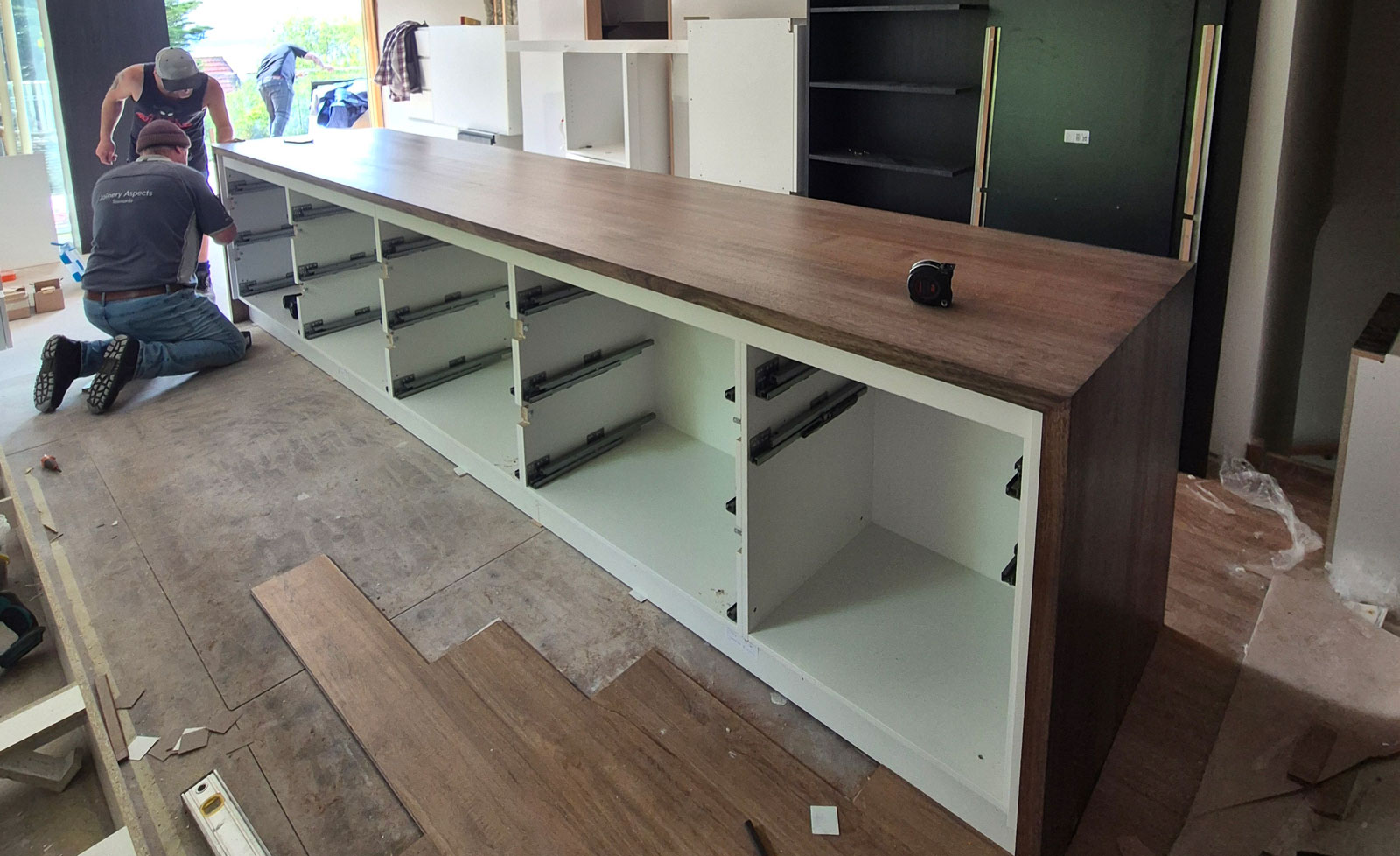
"A recent project example was a full kitchen and laundry renovation, while the family was still living there with two young kids. We sequenced the building program so they always had one working bathroom and a temporary kitchen set-up in the garage with a bar fridge and microwave."
"It meant the trades worked slightly slower in places, but the family never lost the ability to actually function day to day." says Zak, co-owner of Hobart builders Nomac Built.
That kind of planning doesn't happen by accident: it comes from a builder asking the right questions before the quote is even finalised, not halfway through demolition.
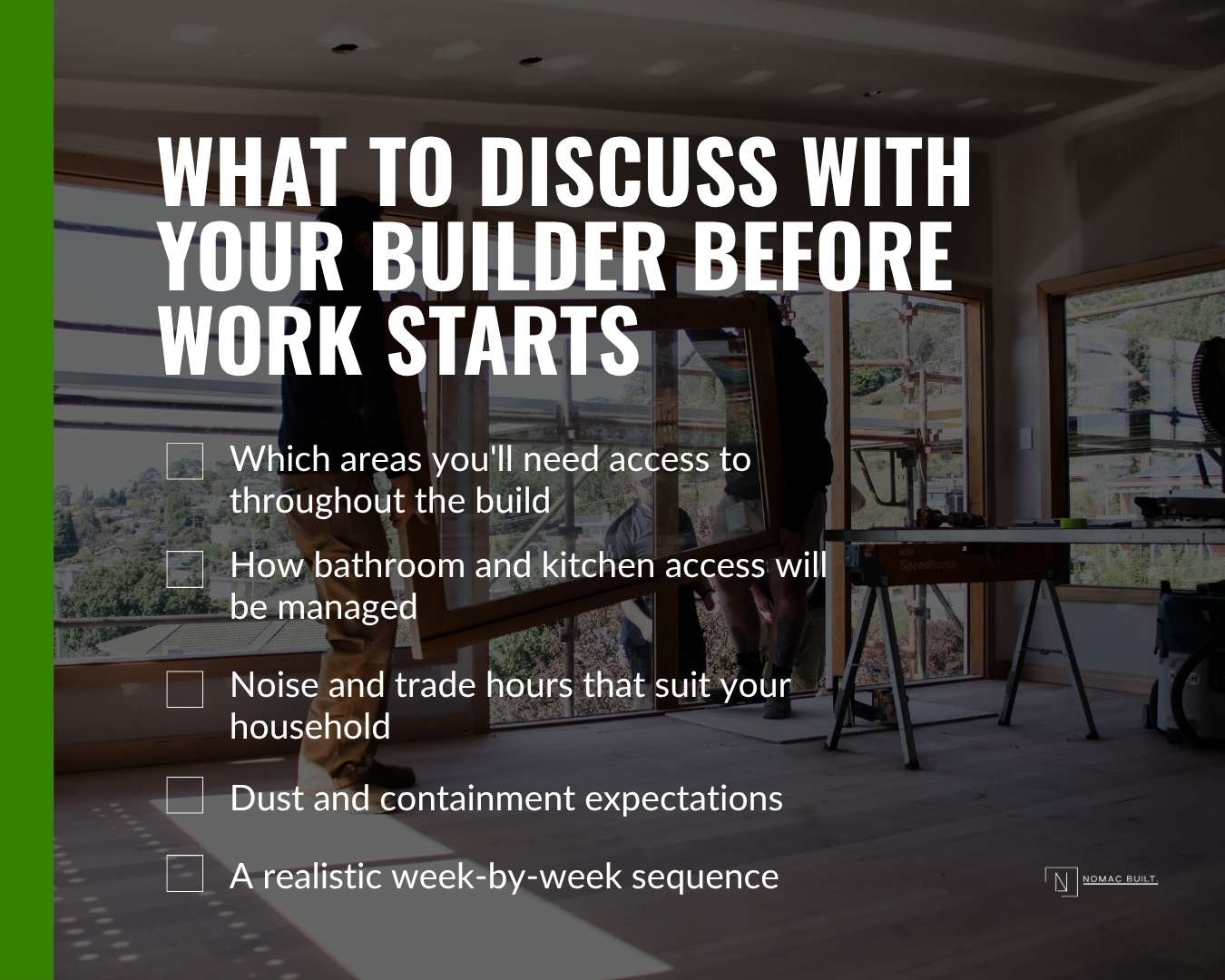
Before any live-in renovation kicks off, there are a handful of practical conversations worth having early. Getting these sorted before the contract is signed avoids most of the friction that comes up later, and it's part of why we always recommend working with a professional builder rather than a DIY approach once compliance-critical work like plumbing or structural changes is involved.
Tom, co-owner of Nomac Built, puts it this way, "The questions homeowners ask before we start tell us a lot about how the job needs to be run - if someone tells us upfront they've got a toddler who naps at one o'clock every day, that's really useful information."
"That sort of insight changes when we schedule the noisy trades, but importantly not whether we can do the job or not."
Every live-in renovation we run starts with the same groundwork, understanding how the household actually functions before we touch the schedule.
That means walking through the home with you and talking through which rooms need to stay usable and for how long, not just measuring up the renovation area. This sits alongside our usual step-by-step renovation process, with one key difference: the sequence gets built around your household, not just the build itself.
From there we build a staged sequence that keeps disruption contained to one section of the house wherever possible. A bathroom renovation in a single-bathroom home gets planned completely differently to the same job in a house with an ensuite. We'll often bring forward or delay certain trades specifically to protect access to a working kitchen or bathroom, even if it's not the most efficient order from a pure construction standpoint.
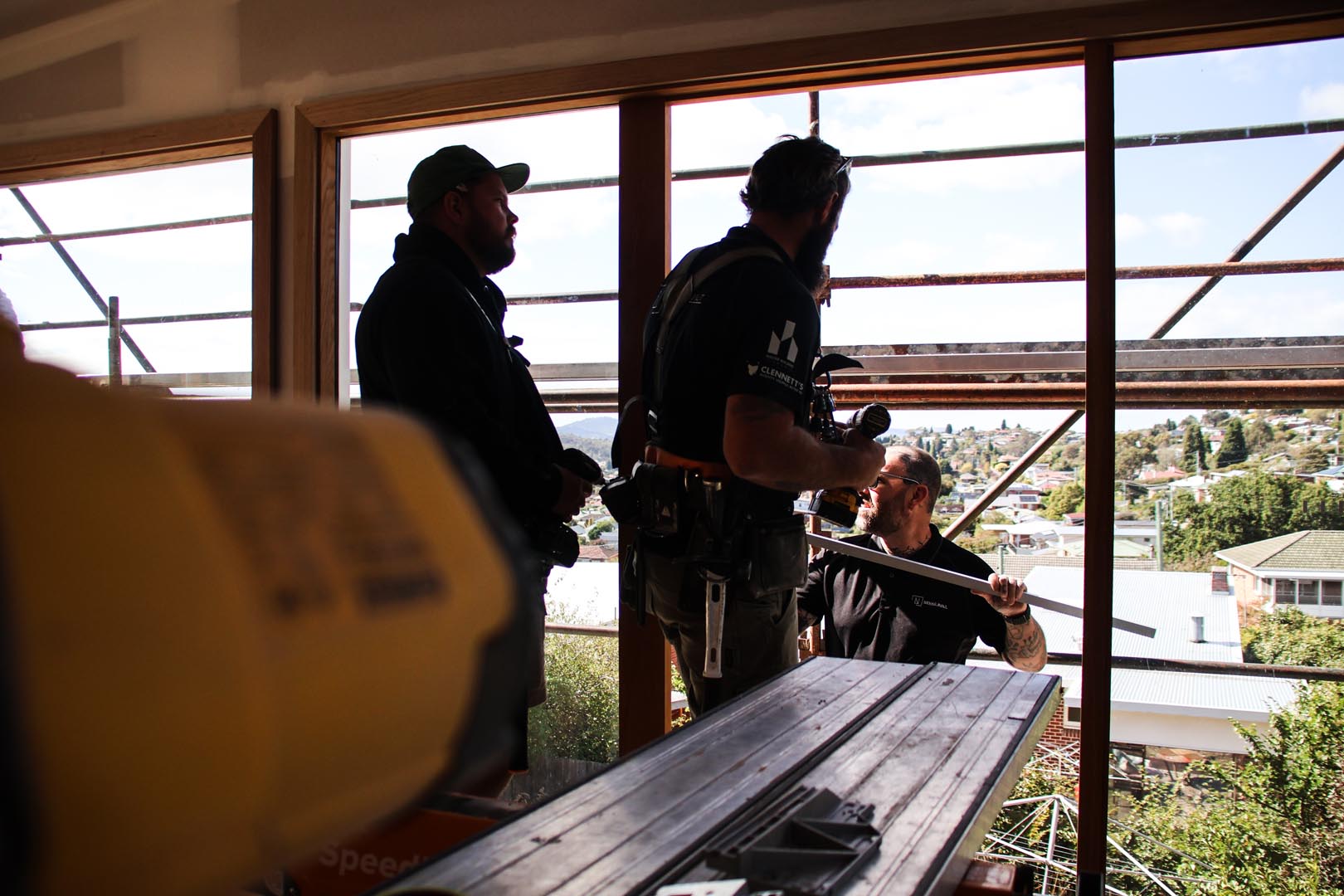
Dust and access protection get treated as standard, not an extra. Temporary walls, sealed doorways and clear pathways through the rest of the house are part of how we run a job. The goal is that the parts of your home not under construction stay genuinely liveable, not just technically accessible.
If you're weighing up whether a live-in approach suits your project, our custom Hobart home builders team can walk through the scope with you and flag what's realistic before you commit to anything.
A smooth live-in renovation isn't only down to the builder. Homeowners who plan ahead for the disruption tend to find the process far less stressful, and a few practical steps on your side can make a noticeable difference to how manageable the weeks ahead feel.
Expect some level of disruption regardless, dust gets through despite containment, trades occasionally run a day behind, but having the basics sorted means small hiccups don't feel like the project is off track.
Zak recalls one job that stuck with him:
"We worked on a place where the owners set up a proper little kitchenette in the rumpus room before we even started on theirs. Kettle, toaster, mini fridge, the lot. It meant they weren't relying on takeaway every night for six weeks, and honestly, it made the whole job feel less chaotic for everyone."
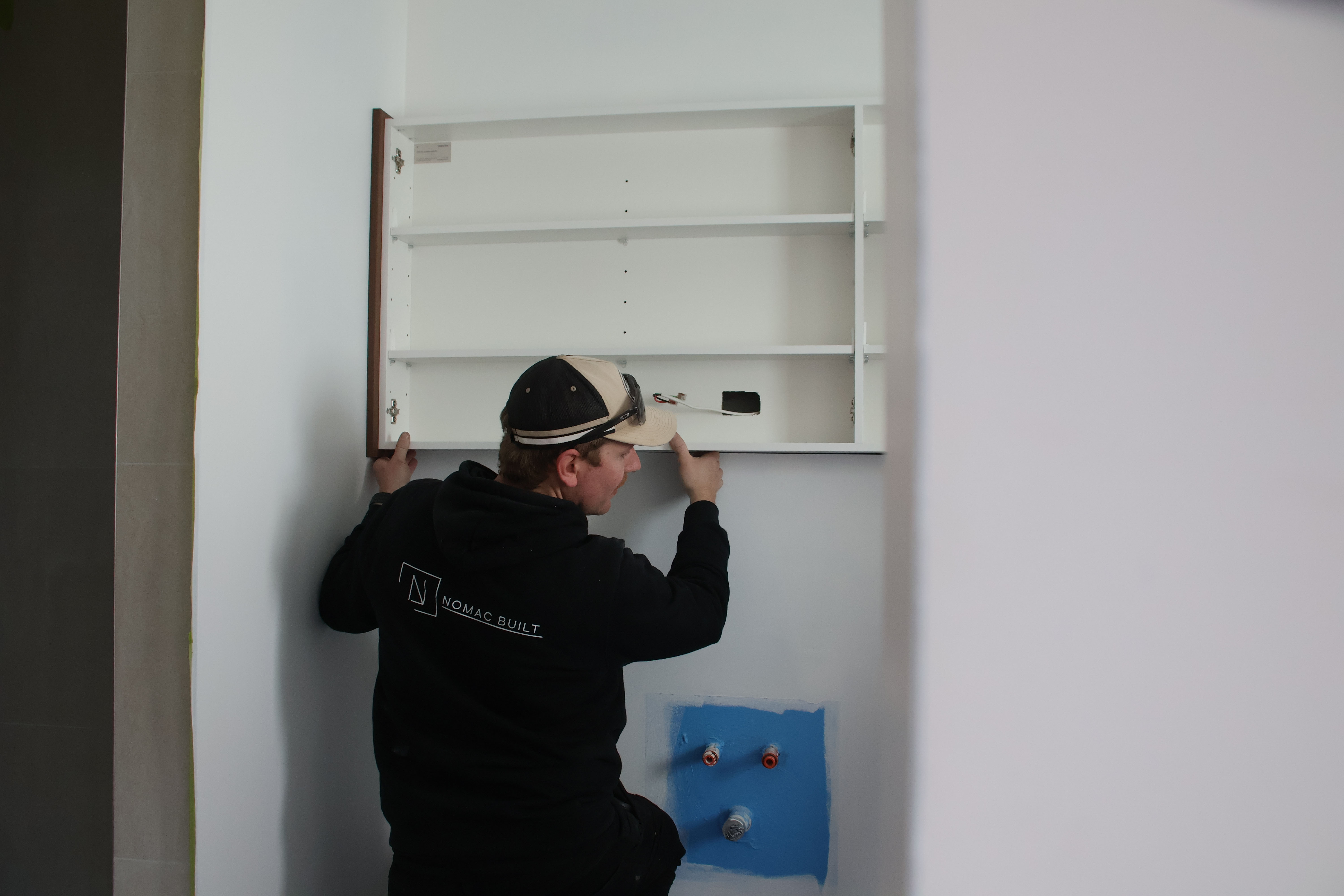
Some tips from the Nomac Built team include:
We talk more about why this matters in our post on communication during a renovation blog post.
Is it cheaper to move out during a renovation?
Not necessarily. Moving out avoids day-to-day disruption, but you're paying for temporary accommodation on top of the build itself. Many homeowners find that staying put, with a well-planned sequence, ends up more cost-effective overall, even with the inconvenience factored in.
Will a live-in renovation take longer than an empty-house renovation?
It can, particularly if access needs to be protected at certain points. The work itself isn't slower, but some tasks get sequenced around your household's needs rather than purely for trade efficiency, which occasionally adds a small amount of time.
How much of the house will actually be off-limits?
This depends entirely on the scope and your home's layout. A good builder will map this out room by room and week by week before work starts, so you know exactly what's accessible and when, rather than finding out as it happens.
What happens if something unexpected comes up mid-renovation?
Unexpected issues, like hidden wiring or moisture damage, are common in established Hobart homes. The difference with a live-in renovation is that your builder needs to communicate changes quickly, since any delay to the sequence directly affects your daily routine, not just the project timeline.
Living in your home during a renovation takes more upfront planning than an empty-house build, but it's far from unmanageable when the sequencing, access and communication are sorted out properly from the start. The projects that run smoothly are the ones where the builder understands your household before the first trade turns up.
If you're weighing up a renovation while staying in your Hobart home, get in touch with Zak and Tom at Nomac Built for a conversation about what a realistic, liveable plan would look like for your place.
We'll walk you through the sequencing, the access trade-offs and what to expect week to week, so you can make the decision with a clear picture in front of you.

October 12, 2026
Thinking about building on Bruny Island? Zak and Tom from Nomac Built break down the real ferry logistics, from concrete trucks to trade crews, behind a Bruny Island build.
read full post
October 1, 2026
Storage, a workshop or somewhere to park the car? Tom and Zak from Nomac Built break down when a shed does the job and when a garage is the better call in Hobart.
read full post
September 28, 2026
Confused by builder websites that all sound the same? Tom and Zak from Nomac Built break down what actually separates a custom builder from a volume builder in Hobart.
read full post
August 31, 2026
Comparing builder quotes in Hobart? Here's how tools like ChatGPT and Claude can help you understand the fine print and compare like for like.
read full post
August 24, 2026
Renovating or building in Hobart? Finalising your joinery plans before the rough-in stage avoids costly rework and keeps your project on track. Here's why it matters.
read full post
July 27, 2026
Wondering how long a bathroom renovation takes? Here's a realistic Hobart timeline, common causes of delays, and how to keep your project on track.
read full post
