
If you've spent any time researching builders for a new home in Hobart, you've probably noticed something strange: most of the websites say the exact same thing. Quality workmanship. Attention to detail. A team you can trust. Scroll through five builder sites in a row and they start to blur into one.
Somewhere in that mix, you'll see the word "custom" thrown around a lot. So will "volume builder," usually said like it's a bad thing.
But what do those terms actually mean once you're standing on your block in Taroona or Blackmans Bay, working out how a house is actually going to sit on it?
The difference isn't the marketing language. It's a genuinely different way of building, and it matters more here than it does in a lot of places, because so much of Hobart is hills, older streets and blocks that don't run flat and square.
Here's what actually separates the two, and how to tell which one you're talking to.
A volume builder works from a set catalogue of designs, built at scale across many sites. It suits some blocks well, and struggles on others. Here's how the model actually works, and where it holds up.
There's nothing wrong with that model on the right block, it just isn't built to flex when your block has its own set of challenges.
Southern Tasmania doesn't hand out many blocks that behave like a display village site.
Fall across the block, orientation for winter sun, older stormwater and sewer connections in established suburbs, heritage overlays in some of the older inner areas - all of it changes what a house needs to do to actually work on that piece of ground.
A standard catalogue plan usually assumes flat ground and a rectangular lot.
Put that plan on a sloping block in Sandy Bay or a narrow infill site in Glenorchy, and something has to give. Sometimes it's a costly re-engineering of the footings. Sometimes it's a compromised layout that ignores the best views or the northern light. Sometimes it's a pile of variations added on top of a base price that looked attractive until they showed up.,

As Tom, co-owner of Nomac Built, puts it:
"We get called in fairly often to quote on blocks where someone's already tried to fit a standard plan on and it just doesn't work."
"A decent fall across the site usually means re-engineering the footings, sometimes a full suspended slab, and that adds real site costs that were never in the original number anyone was quoted. That's not the builder's fault exactly, it's just what happens when a flat-block design meets a hill."
Custom building isn't a marketing word for "nicer finishes." It means the design starts with your block, your brief and your budget, rather than starting with a plan and working backwards.
Custom building often includes:
That last point is where the two models really part ways. On a lot of volume builds, the person who sold you the house and the person managing the site are different people, and neither of them is easy to reach directly once the contract's signed.
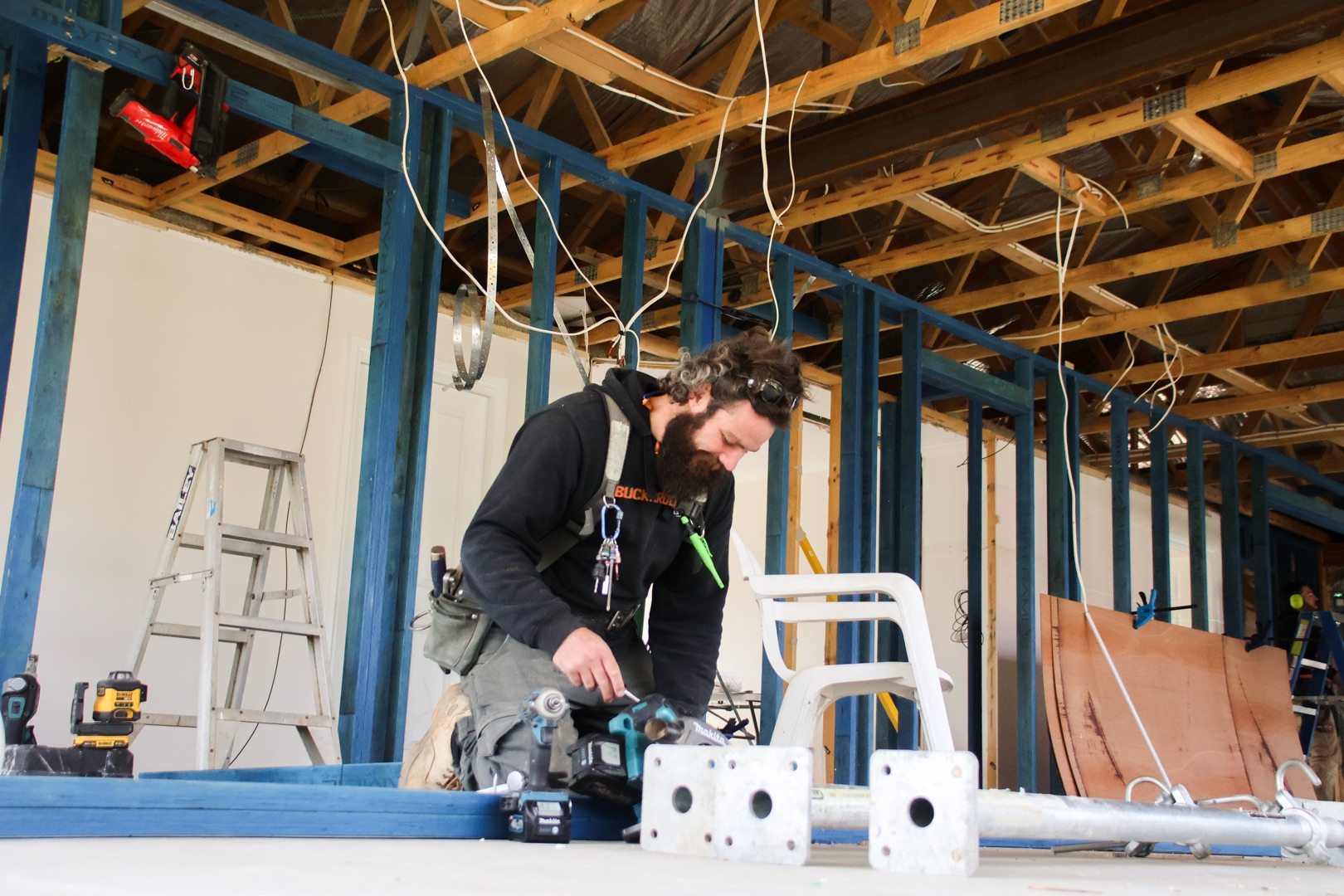
As Zak, co-owner of Nomac Built, sees it:
"The thing we hear most from people who've been through a volume build before is that they never really knew who to call."
"You'd get handed between a sales rep, a customer service line and a site super who's running four other jobs at the same time."
"With us, if you've got a question about the tiling in your ensuite or why a wall moved fifty millimetres, you're talking to Tom or me directly, and we were in the room when that decision was made."
This is where a lot of the confusion sits.
A volume builder's advertised price often looks lower than a custom quote for the same size home, and on paper it is, for the base package. What that number frequently doesn't include are the site costs specific to your block, upgraded fixtures beyond the display-home standard, or changes you'll almost certainly want once you see the plan against your actual land.
A custom quote tends to look larger up front because it's built around your real block and your real inclusions from the start, not a generic base spec with a long list of optional extras waiting behind it.
Tom is direct about it:
"We'd rather give someone a number in week one that reflects what the house will actually cost to build, even if that number's less comfortable to hear at first."
"We go through the quote line by line, provisional sums for things like tiling or a PC item on tapware included, so there's no surprise appearing three months into the build when a variation lands that nobody saw coming."
A few practical questions cut through the marketing language fast:
As Zak explains: "Some of the biggest builders in the country market themselves as custom now, because the word tests well."
"The test isn't what the brochure says, it's whether the design process actually started with your block or with a plan that already existed before they'd seen it."
These are the questions that come up most often once people start comparing quotes, so we've answered them straight rather than leaving them for a phone call.
Is a custom builder always more expensive than a volume builder?
Not necessarily, though the quotes often look different for good reason. A custom quote usually includes your real site costs and finishes from day one, while a volume builder's advertised price often excludes site-specific costs and upgrades that get added later. By the time both are compared apples to apples, the gap is frequently smaller than the headline prices suggest.
Can a volume builder handle a sloping or difficult Hobart block?
Some will take it on, but it usually means significant variations to their standard design and a bigger site cost allowance than a flat-block build. This is exactly the situation where a custom approach tends to produce a better outcome, because the house is designed for that slope from the start rather than adjusted onto it after the fact.
How do I know if a builder marketing themselves as "custom" is actually running a volume model? Ask how many active projects their site team is managing at once and whether the same person who quotes your job will be the one delivering it. A genuine custom builder can usually answer that specifically, because the answer is usually "a small number, and yes."
Do custom builders in Hobart ever use existing floor plans?
Often, yes, and there's nothing wrong with that as a starting point. The difference is whether that plan gets adapted to your block, orientation and brief, or whether your block gets adapted to fit the plan. A good custom builder will tell you honestly which one is happening.
Does a custom build always take longer than a volume build?
Not always, but the design and quoting stage tends to take a bit more time up front, because more of the decision-making happens before the build starts rather than during it. Most clients find that trade-off worthwhile, since it means fewer changes and delays once construction is underway.
Both models exist for a reason, and a volume builder can be a perfectly sound choice on the right flat, straightforward block. But if your site has any complexity at all, a slope, an outlook worth designing around, an older service connection, or council overlays to work through, the custom process exists to solve exactly that kind of problem rather than compromise around it.
We'd rather spend the extra time upfront getting your quote and design right than hand you a number that changes six times before the slab goes down. Ready to see what a genuinely tailored quote looks like from a custom home builder who's actually walked your block? Get in touch with the Nomac Built team to talk it through.
August 31, 2026
Comparing builder quotes in Hobart? Here's how tools like ChatGPT and Claude can help you understand the fine print and compare like for like.
read full post
August 24, 2026
Renovating or building in Hobart? Finalising your joinery plans before the rough-in stage avoids costly rework and keeps your project on track. Here's why it matters.
read full post
July 27, 2026
Wondering how long a bathroom renovation takes? Here's a realistic Hobart timeline, common causes of delays, and how to keep your project on track.
read full post
July 2, 2026
Staying in your home during a renovation? Learn how to plan a live-in renovation in Hobart that stays liveable, safe and on track from start to finish.
read full post
May 18, 2026
Years spent building across Hobart teach lessons no brochure can. Tom and Zak share what local experience really means for your renovation or new build.
read full post
June 22, 2026
Wondering how much a home extension costs in Hobart in 2026? This guide covers cost ranges, price drivers across suburbs, and budget planning tips.
read full post
